Bone Healing After Tooth Extraction: Do You Really Need a Bone Graft?
- Apr 21
- 4 min read
Tooth extraction is a common dental procedure, but what happens after the tooth is removed? One important aspect is how the bone heals in the empty socket. Many patients wonder if they need a bone graft to support this healing process. This article explains bone healing after tooth extraction and when a bone graft might be necessary.
When a tooth is removed, the surrounding bone begins to change almost immediately. But the key question is:
Can the bone heal on its own, or is a bone graft necessary?
How Bone Heals After Tooth Extraction
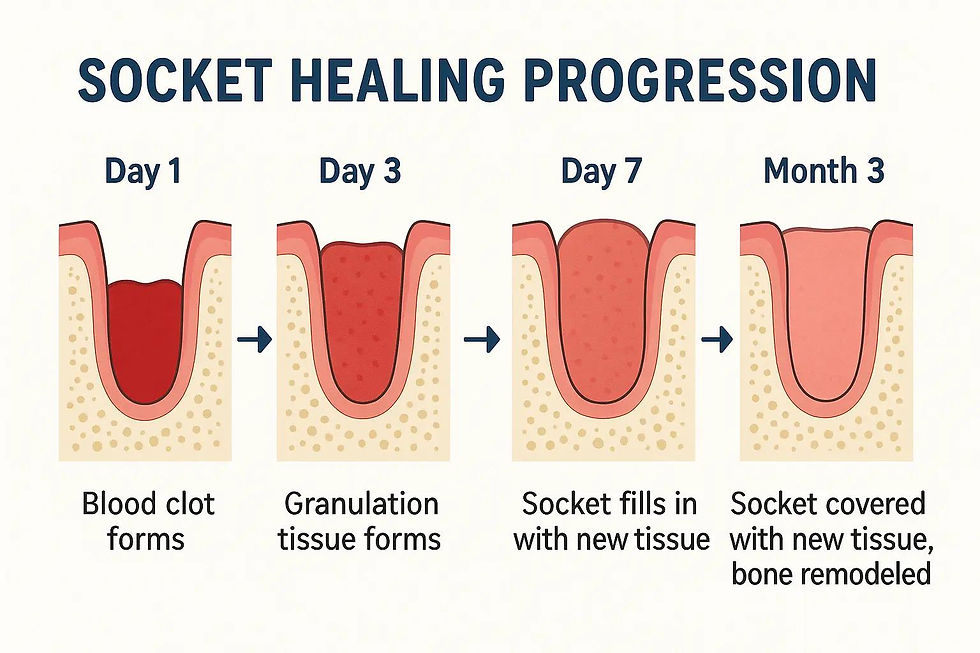
When a tooth is extracted, the bone that once supported it begins a natural healing process. The socket fills with blood, which forms a clot. This clot is essential because it protects the bone and soft tissue underneath. Over the next few weeks, the body replaces the clot with new bone tissue.
Bone healing after tooth extraction usually follows these stages:
Blood clot formation: Immediately after extraction, a blood clot forms in the socket.
Soft tissue growth: The gum tissue starts to grow over the clot within a few days.
Bone formation: New bone cells begin to fill the socket over several weeks.
Bone remodeling: The new bone strengthens and reshapes over months.
This process can take three to six months, depending on the individual’s health and the location of the extraction.
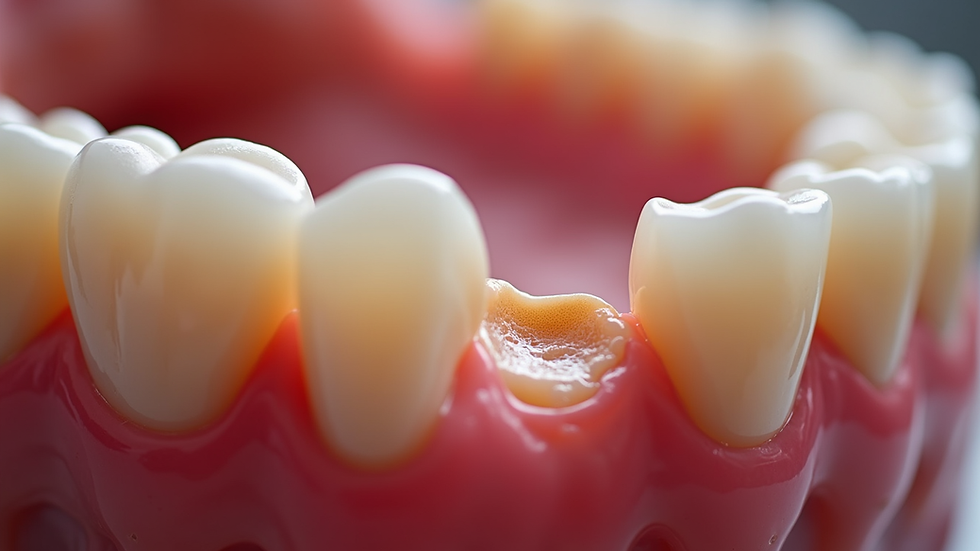
Bone naturally shrinks in width and height after tooth removal. This shrinkage can affect the shape of the jaw and the appearance of the face. It also impacts the ability to place dental implants later.
What Does the Research Show?
A high-level systematic review of randomized controlled trials (Avila-Ortiz et al., 2014, Journal of Clinical Periodontology) found:
Bone grafting reduces dimensional bone loss after extraction—but does not completely prevent it.
Key Findings:
Without intervention → significant bone shrinkage
With bone graft → less shrinkage, better ridge preservation
No technique completely stops bone resorption
Cochrane Review: Ridge Preservation Techniques
One of the most respected evidence-based reviews from the Cochrane Collaboration evaluated alveolar ridge preservation techniques for implant site development.
What They Found:
Ridge preservation reduces bone loss after extraction
It helps maintain ridge width and height
However, it does not completely prevent bone resorption
There is no clear evidence that one graft material is superior
Implant success rates remain high regardless, with or without grafting
In other words: grafting improves the conditions, but is not always essential for success.
Bone Graft vs Natural Healing
Without Bone Graft:
Faster, simpler healing
More bone loss over time
May limit implant options later
With Bone Graft:
Better preservation of bone volume
Improved implant positioning options
Additional cost and healing time
What This Means for Patients
Here’s the most important takeaway:
👉 Bone grafting is beneficial—but not always required.
Modern guidelines from the International Team for Implantology emphasize that proper diagnosis and planning are more important than routinely performing grafting procedures.
At our clinic, we use:
3D imaging (CBCT)
Digital planning
Guided surgery
to determine whether grafting is truly necessary.
Modern Alternative: Avoiding Bone Grafts
In many cases, especially full-arch treatments, we can avoid grafting by using:
Strategic implant positioning
Digital workflow
👉 Learn how this works in detail:https://www.implantandsurgeryhouse.com/post/same-day-dental-implants-and-fixed-new-teeth-towson
How Bone Grafting Works in Practice
After tooth extraction, the dentist cleans the socket and places the bone graft material inside. The graft acts as a scaffold for new bone to grow on. Over time, your body replaces the graft with your own bone.
The site is then may be covered with a membrane or sutured to protect it during healing. Patients usually experience mild swelling and discomfort, which fades in a few days.
Healing after a bone graft takes longer than natural healing, often four to six months. During this time, it is important to follow care instructions to avoid infection or graft failure.
Bone Grafting and Dental Implants
Dental implants require enough bone to hold the implant securely. If the bone shrinks too much after extraction, implants may not be possible without grafting.
One example of a service that supports this process is the Bone Grafting Procedure offered by Implant and Surgery House. This service uses advanced techniques to rebuild bone and prepare the site for implants. You can learn more about it here.
Another helpful service is the Dental Implant Placement. After the bone graft heals, implants can be placed with precision. This service ensures long-term stability and function. More details are available here.
Risks and Considerations of Bone Grafting
Bone grafting is generally safe but carries some risks:
Infection at the graft site
Graft rejection or failure
Swelling and discomfort
Longer healing time
Patients with certain health conditions, such as diabetes or smoking habits, may have slower healing or complications.
Discussing your medical history and concerns with your dentist helps ensure the best outcome.
Summary
Bone healing after tooth extraction is a natural process that can be supported with bone grafting when needed. Bone grafts help preserve jawbone volume, especially when planning for dental implants. Not every extraction requires a graft, but it is often recommended for complex cases or when bone loss is significant.
Services like the Bone Grafting Procedure and Dental Implant Placement at Implant and Surgery House provide care for patients needing advanced oral surgery. These treatments improve outcomes and help maintain oral health and facial structure.


Comments